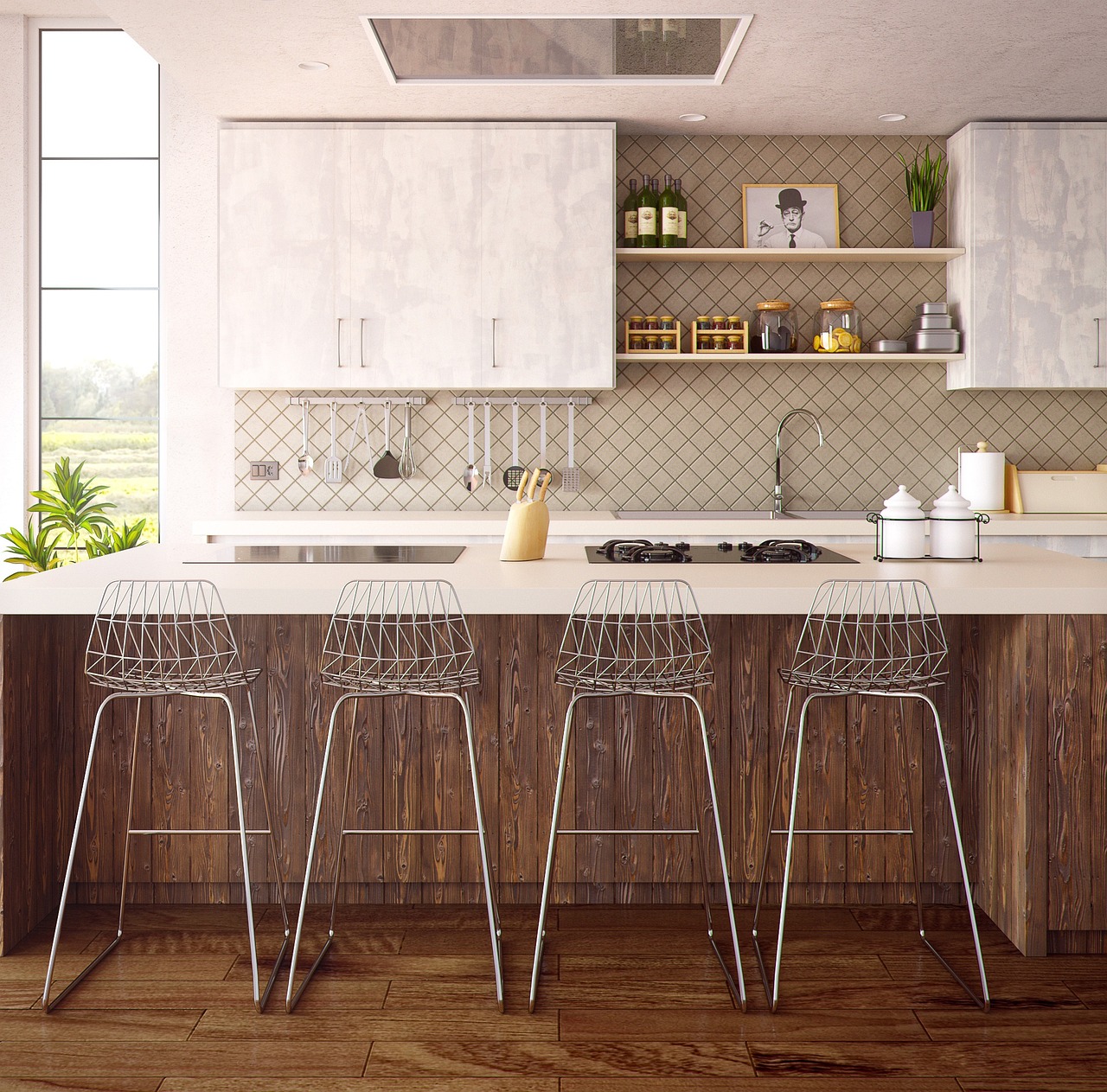

In a kitchen no wider than a hallway say, 6 to 8 feet across every inch determines whether you can prep, cook, and clean without collisions. A 24-inch range, an 18-inch dishwasher, and a 30-inch sink base already demand over 6 feet of uninterrupted run; add door swings and you quickly see why small kitchens succeed or fail on planning.
If you’re looking for small kitchen design ideas that actually fit real dimensions and budgets, this guide gives numbers, trade-offs, and simple decision rules. Use it to plan a layout that moves, stores, and illuminates efficiently, even in tight footprints.
Start With The Box: Layout And Circulation
Begin by mapping the “box”: inside wall-to-wall width, ceiling height, window and door locations, and any bulkheads or radiators. In most small apartments, usable aisle width is the binding constraint. For a single-cook kitchen, target a clear aisle of 36 inches; if two people will routinely pass, 42 inches reduces shoulder clashes. In a one-wall kitchen, a 40–48 inch clearance to the opposite wall or island is comfortable; under 36 inches, fridge and dishwasher doors will interfere with passage.
Door swings compound congestion. A 30-inch range door swings about 20 inches; a standard fridge needs 1–2 inches side clearance to open to 90 degrees and at least 36 inches of frontal clearance to pull drawers. Pocket or sliding doors to the kitchen can recover 8–10 square feet of maneuvering area versus a hinged door. Where possible, hinge the fridge so it opens toward the work zone to reduce reach.
NKBA: Typical guidance suggests 36 inches minimum aisle for a one-cook kitchen and 42 inches for two cooks; work triangle legs of 4–9 feet each, totaling 13–26 feet.
The classic work triangle is useful but not sacred in small spaces. If the triangle sum drops below 13 feet (e.g., 3 feet between sink and stove), heat and splashes converge; if it exceeds 26 feet, you waste steps. In tight galley kitchens, a “linear flow” fridge to sink to prep to cook often beats a triangle. Prioritize adjacency of sink and prep space; the sink is touched in roughly 45–60% of tasks, so a 24–36 inch uninterrupted prep stretch next to it increases throughput more than adding a second small prep area.
Choose a layout that matches constraints: galley (two parallel runs) excels when width is 7–8 feet and length exceeds 10 feet; an L-shape with a 24-inch return solves shallow rooms and reduces appliance door conflicts; a one-wall layout fits studios, but add a 12–18 inch pull-out “satellite” surface to create a landing zone. Islands are rarely viable below 36 inches of clearance all around; a 24-inch-deep peninsula reclaimed from a dining nook often delivers more function in the same footprint.
Storage That Works Hard
Deep drawers beat doors for almost everything under the counter. A 30-inch-wide, 24-inch-deep drawer can store 60–80 pounds of cookware; two drawers (one 6–8 inches tall for utensils, one 10–12 inches for pots) can replace a jumble of shelves. For base cabinets, aim for 2/3 drawers, 1/3 doors (for plumbing and tall items). Choose full-extension slides so nothing hides in the back; soft-close adds about 10–15% to hardware cost but reduces slamming in tight quarters.
Claim vertical inches. Most kitchens have 18 inches between countertop and upper cabinets; if you can raise uppers to 21 inches, you gain headroom for small appliances without crowding. Ceiling-height cabinets (e.g., to 96 inches) provide 15–25% more storage than 30-inch uppers, assuming a 12-inch-deep over-fridge cabinet for infrequently used items. Inside uppers, shelf spacing of 10–12 inches holds dinner plates; a 12–16-inch-deep pantry is enough for cans and boxes without losing items at the back. In very tight runs, a 9–15-inch-wide pull-out pantry keeps labels visible and reduces wasted inches.
Exploit odd spaces. A toe-kick drawer (3–4 inches high) holds baking sheets or cutting boards. Filler pull-outs (3–6 inches) accommodate spices or oils next to the range but avoid placing oils within direct radiant heat; position pull-outs 6–9 inches away from burners. Corners are tricky: a diagonal drawer yields the least waste; a 32–36-inch lazy Susan offers better access than a blind corner unless you install a slide-out “magic corner,” which is pricier but effective when every cubic inch matters.
Multiply function with inserts and ledges. A workstation sink with built-in ledges for a cutting board and colander can replace 12–18 inches of counter during meal prep. Magnetic knife strips reclaim a drawer. Inside cabinet doors, 1–2-inch-deep racks hold wraps or spices (clear jars amplify at-a-glance inventory). Cost-wise, expect $50–$300 per cabinet for high-quality pull-out hardware and $200–$600 upcharge per workstation sink compared to a standard sink; these tend to pay back in daily efficiency in kitchens under 90 square feet.
Surfaces, Appliances, And Utilities
Countertop real estate is the most valuable commodity in a small kitchen. Plan for a minimum of 36 inches of continuous prep space adjacent to the sink; if you cannot get that in one piece, combine a 24-inch zone with a 12-inch pull-out or add a flip-up leaf at the end run. Keep at least 12 inches landing space on the handle side of the fridge and 9–12 inches on at least one side of the cooktop to stage hot pans safely. Standard countertop depth is 25–25.5 inches over 24-inch-deep bases; if plumbing allows, a 27-inch-deep counter can add 8% working area without enlarging the footprint.
Scale appliances to the space and your cooking patterns. If you cook for 1–2 people, a 24-inch range is usually sufficient; a 30-inch cooktop offers more elbow room but forces trade-offs elsewhere. Induction tops heat fast, stay cooler to the touch, and eliminate the need for large burner-to-burner clearances; the downside is pot compatibility and sometimes higher electrical demands. Dishwashers come as 18-inch slim units (8–10 place settings) and 24-inch standard (12–14 settings). For refrigeration, a 24-inch counter-depth unit (10–13 cubic feet) suits many couples; frequent entertainers may still need 30-inch, but consider a 24-inch column plus a 24-inch under-counter freezer to free visual width up high.
Ventilation must match heat and room size. A rule of thumb is 150–300 CFM for small electric or induction ranges and higher for gas; ducted hoods clear moisture and odors better than recirculating units. In tight apartments where ducting is prohibited, choose a recirculating hood with a quality charcoal filter and change it every 3–6 months under heavy use. Keep hood widths at least as wide as the cooktop; with 24-inch ranges, a 24–30-inch hood with good capture area performs better than a 20-inch unit, because capture depends on canopy volume as much as fan rating. Check local code for makeup air thresholds; requirements vary.
Plan utilities early. In the U.S., kitchens typically require two 20-amp small-appliance circuits and GFCI protection at countertops; adding an induction range may demand a 40–50-amp circuit. Group high-draw appliances (dishwasher, disposal, microwave) on dedicated circuits. For plumbing, a single-bowl 22–24-inch sink often works better than a divided 30-inch bowl in small spaces; pair it with a pull-down faucet to extend reach. If relocating the sink forces long horizontal drain runs, verify slope (about 1/4 inch per foot) and venting; improper slope causes slow drains and odors.
Light, Color, And Materials For Perceived Space
Small kitchens feel larger when surfaces are uniformly lit without glare. Aim for roughly 300–500 lux on counters (task lighting) and 100–200 lux ambient. Under-cabinet LED strips at 2700–3500K provide shadow-free task light; place them 2–3 inches from the front of the cabinet to avoid splash glare on the backsplash. Choose LEDs with CRI 90+ so produce and meats look natural. If uppers are absent on one wall, a 2–3-inch surface-mount ceiling fixture plus a linear pendant over a peninsula can fill the ambient layer.
Color and reflectance matter. High-LRV (Light Reflectance Value) paints 70 or higher bounce light and reduce the number of fixtures needed for the same brightness. Glossy cabinet fronts reflect more but show fingerprints; a satin finish balances cleanability and diffusion. Large-format backsplash tiles (e.g., 12×24 inches) reduce grout lines, which can visually clutter a small room. Mirror or stainless backsplashes amplify light but require vigilant cleaning; consider a mirrored niche rather than a full wall if maintenance is a concern.
Material choices should align with use and footprint. Quartz counters are predictable, require no sealing, and handle splashes; thinner profiles (1.2 cm with a mitered edge) can look sleek without heavy visual mass, though they may need additional support spans over dishwashers. Butcher block is economical and warm; it needs oiling every 1–3 months near the sink and is vulnerable to standing water. For floors, LVP (luxury vinyl plank) offers resilience and easy cleaning; in narrow rooms, run planks parallel to the long dimension to elongate the sightline. If you cook frequently, choose low-sone (under 1.5 sone) hoods and soft-close hardware to avoid noise buildup in reflective, small volumes.
Use transparency selectively. Open shelving lightens walls but can halve storage density compared with closed uppers when you factor in “display spacing.” Limit open shelves to 24–36 inches of run for daily-use items and keep everything else behind doors. Glass cabinet doors trick the eye by showing depth but require tidy contents; frosted glass hides clutter while preserving the effect.
Conclusion
Decide your non-negotiables (e.g., 36 inches of prep by the sink, 36-inch aisle, and ventilation that actually clears steam), then scale everything else appliances, cabinet types, and finishes to protect those wins. If a choice adds steps, steals landing space, or complicates utilities, it likely costs more than it gives in a small kitchen. Measure twice, map clearances and door swings, and invest in drawers, lighting, and a sink that earns its keep; those three deliver the highest returns in tight footprints.